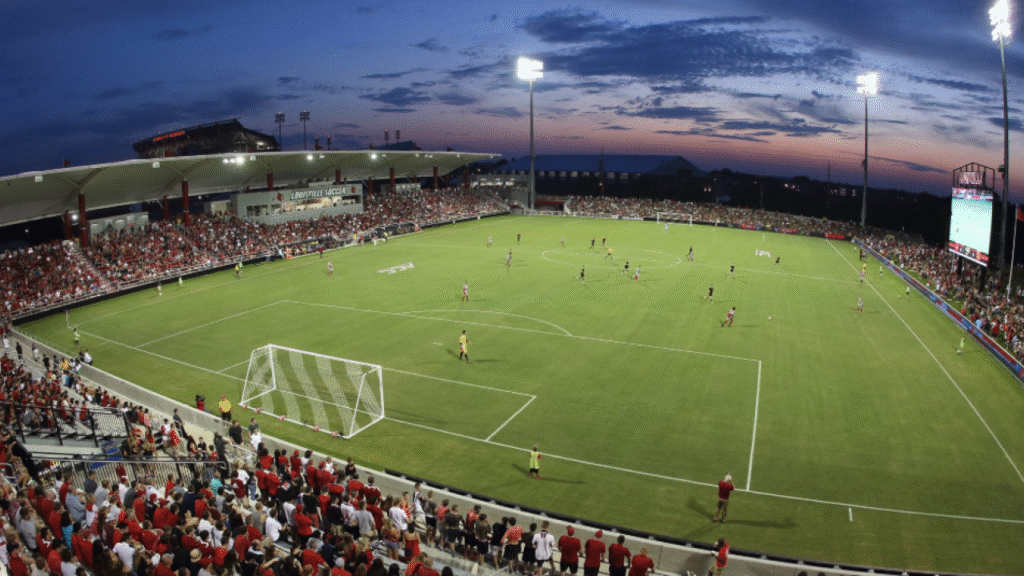
College soccer in the United States offers one of the best pathways in the world for ambitious footballers who want to combine high-level competition with a university degree. At Next Goal USA, we help international soccer players earn athletic and academic scholarships at NCAA, NAIA, and NJCAA universities — guiding you through every step of the recruiting process.
The U.S. college system gives soccer players something rare: the chance to train and compete in a professional-style environment while earning a recognized university degree. Teams train several times per week, play national competitions, and have access to strength coaches, athletic trainers, sports science, and top facilities. At the same time, universities support players academically with tutors, advisors, and flexible study plans.
For international players, soccer scholarships in the USA can reduce or even cover the full cost of tuition, housing, and meals — turning a dream into a realistic, structured opportunity.
NCAA programs, especially Division I and strong Division II teams, offer very competitive environments, big athletic departments, and intense schedules. These teams often recruit players from professional academies and national youth teams. For players with strong experience, the NCAA can be the ideal place to grow and gain exposure.
NAIA soccer often matches NCAA Division II in level and can be more flexible with academic requirements and scholarships. Many NAIA coaches actively recruit international players because they value their technical quality and tactical understanding. It’s a great option for players who want strong competition, personal support, and attractive scholarship packages.
Junior Colleges compete at a high level and are perfect for players who need time to improve English, academics, or physical development. Many international athletes start at NJCAA schools, earn playing time, build highlight videos, and then transfer to NCAA or NAIA programs with stronger scholarship offers.
First touch, passing accuracy, decision-making, movement off the ball, and understanding of your position are critical. Coaches want players who read the game, not just those who are fast or strong.
Speed, endurance, strength, and intensity are important in college soccer. Coaches look at how you handle duels, how quickly you recover, and how you compete over 90 minutes.
Body language, work rate, reaction to mistakes, and communication with teammates say a lot about you. Coaches want leaders, competitors, and players who will represent the university with maturity.
College soccer includes NCAA, NAIA, and NJCAA, offering opportunities for many levels. Top NCAA Division I teams recruit players from professional academies and national teams, while NAIA and NJCAA welcome strong club, regional, and school-level players who show potential, discipline, and good fundamentals.
Yes. Full scholarships exist in NCAA D1, D2, NAIA, and NJCAA, but they are competitive. Most players receive a combination of athletic, academic, and international grants that together reduce the total cost significantly.
The official season runs from August to December, but teams train year-round. Spring season includes friendly matches, strength training, and technical development.
Coaches evaluate your technical ability (first touch, decision-making), tactical awareness, physical readiness, and mentality. They also consider your highlight video, academic grades, English level, and communication.
Yes. Some athletes move from college soccer to MLS, USL, NWSL, or professional leagues abroad. College soccer provides exposure, development, and a structured path toward professional opportunities.
Absolutely. Coaches rely on highlight videos to evaluate international players. A well-structured, high-quality video is essential to generate interest and scholarship offers.
Universities require a minimum GPA and an English test (Duolingo, TOEFL, or IELTS). Meeting academic standards increases scholarship options and speeds up the admissions process.
NJCAA offers strong competition, lower costs, and immediate playing time. It’s ideal for players who need development, better grades, improved English, or a pathway to transfer into NCAA or NAIA with better scholarship offers.
Helping athletes and families understand everything about athletic scholarships, NCAA rules, highlight videos, and visas.
NCAA vs NAIA vs NJCAA: Which U.S. College Division Is Right for You?
How to Get an Athletic Scholarship in the USA: The Complete Guide for International Athletes
How the U.S. College Recruiting Process Works for International Student-Athletes
How to Create a Highlight Video That Gets You Recruited by U.S. College Coaches
SAT vs TOEFL vs IELTS vs Duolingo: Which English Test Should International Student-Athletes Take?
Do International Athletes Go Pro After College? The Truth About NCAA, NAIA, and NJCAA Pathways
Made with by Marc Guerrero. All Rights Reserved.